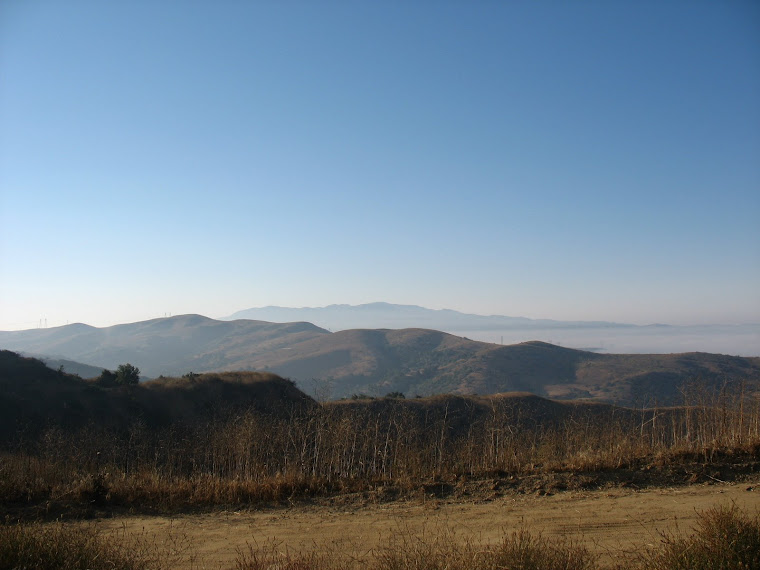
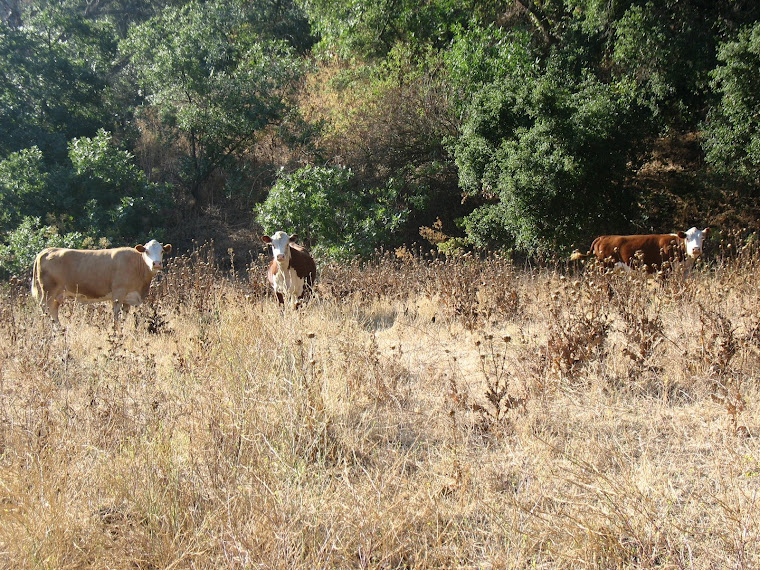
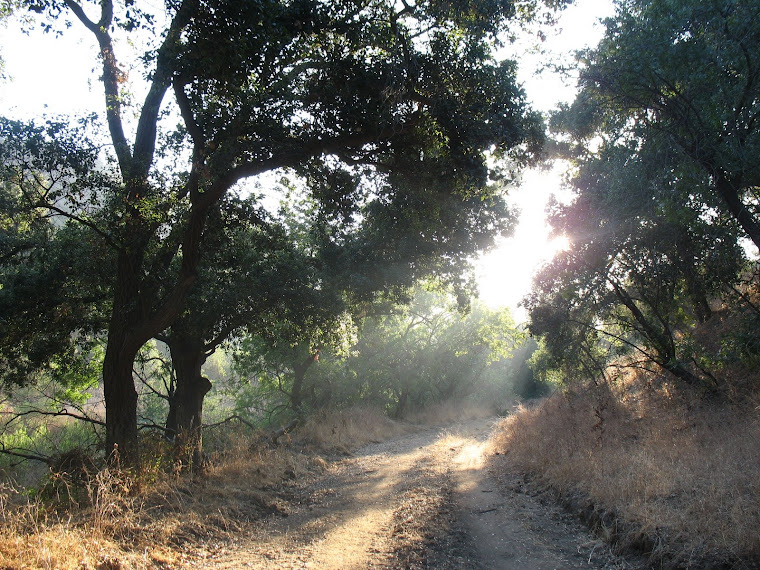
Today's San Gabriel Valley Tribune has a front-page feature by Ben Baeder reporting that, at a time when cities and towns in the state are struggling with the new post-redevelopment agency age, the City of Industry was expected today to purchase thirty-acres of land to add to the nearly 3,000 it has acquired in Tonner Canyon over the last decade or so. Of this about 20% is in Orange County just north of Carbon Canyon. The sale would be for $400,000 from a Scottsdale, Arizona resident, Jack Harding, for the hilly parcel adjacent to the Olinda Alpha Landfill.
Quotes from local figures including a county supervisor, Brea officials and Hills for Everyone executive director Claire Schlotterbeck range from nonplussed to curious to questioning. While environmentalist Schlotterbeck indicated that her organization would have wanted an opportunity to acquire the land and wondered why Industry was interested in adding to its Tonner Canyon holdings, the former use of the acreage as an oil field might have been an inhibitor because of the potential costs of cleanup, though the purchase agreement stated there was no issue of contamination. Strangely, the article's headline refers to the parcel as "wilderness," when it is anything but that, though it is certainly vacant.
Notably, Republican Assembly member Chris Norby of Fullerton, whose district encompasses the area, sounded a note of skepticism about Industry's plans. Although the city had discussed building a reservoir to provide water for a city-owned power plant when land there was first acquired, but has publicly announced otherwise in recent years, Norby questioned whether this was really the case. Moreover, he expressed concern about the city being able to buy land outside the county in which it is situated, though there is historical precedent for this going back to the City of Los Angeles buying non-contiguous land for the fabled Los Angeles Aqueduct project that brought water from the Owens Valley starting a century ago next year. Norby was quoted as suggesting that Industry was "essentially a land-speculation company" and that "we're keeping an eye on it." These sentiments seem a little surprising coming from an Orange County Republican.
Meantime, City of Industry mayor David Perez stated that the city was "going to keep it open space, just like we've been doing with the rest of our property" in Tonner Canyon and, to date, the acreage there has been used for recreational purposes via programs with the Los Angeles County Sheriff's Department and the Boy Scouts of America, the latter of which sold most of the Tonner Canyon land to the city several years ago.
26 January 2012
24 January 2012
On the Skids in Carbon Canyon #s 8627-30
There have been a rash of collisions on Carbon Canyon Road within the last few days. The first seems to have been an eastbound miscalculation on the Brea side just west of the Chino Hills border in which a car veered off the roadway and crumpled a guardrail. A bumper seems to have been retrieved, but other debris remains. This took place likely on Friday and before the rain came in.
Yesterday afternoon about 4 p.m., after the heavier showers had dissipated, but with the highway possibly still a little slick, another wreck took place at the summit of the S-curve in Chino Hills, where a few accidents have occurred lately. There is a Nissan hood grille and other fragments left there.
Then, today, a lightpole was plowed over on the north side of the highway just west of Chino Hills Parkway.
Meantime, a couple of slightly older incidents happened on the Brea side--one mentioned previously was at the old La Vida Mineral Springs property, where a fender lies under a dead bush on the north side of the highway.
Finally, a likely near miss occcurred in which a car heading westbound east of the burned out Manely Friends stable and west of the first mentioned accident above skidded across the opposing lane and into the south side shoulder. There isn't any remaining wreckage, suggesting the vehicle made its cross-highway excursion without any intrusion from travelers coming the opposite way. Skid marks remain to show what took place.
And, it may be worth noting that, in the Sleepy Hollow area, there are some young motorcyclists who have taken to riding on Carbon Canyon Road, as well as the neighborhood's one-way curving lanes, at high speeds and/or without helmets and/or passing other vehicles and/or standing while doing the first two (or maybe all three) of the above. At that age, most of us believe we're invincible--let's hope these young 'uns don't find out the hard way.
Yesterday afternoon about 4 p.m., after the heavier showers had dissipated, but with the highway possibly still a little slick, another wreck took place at the summit of the S-curve in Chino Hills, where a few accidents have occurred lately. There is a Nissan hood grille and other fragments left there.
Then, today, a lightpole was plowed over on the north side of the highway just west of Chino Hills Parkway.
Meantime, a couple of slightly older incidents happened on the Brea side--one mentioned previously was at the old La Vida Mineral Springs property, where a fender lies under a dead bush on the north side of the highway.
Finally, a likely near miss occcurred in which a car heading westbound east of the burned out Manely Friends stable and west of the first mentioned accident above skidded across the opposing lane and into the south side shoulder. There isn't any remaining wreckage, suggesting the vehicle made its cross-highway excursion without any intrusion from travelers coming the opposite way. Skid marks remain to show what took place.
And, it may be worth noting that, in the Sleepy Hollow area, there are some young motorcyclists who have taken to riding on Carbon Canyon Road, as well as the neighborhood's one-way curving lanes, at high speeds and/or without helmets and/or passing other vehicles and/or standing while doing the first two (or maybe all three) of the above. At that age, most of us believe we're invincible--let's hope these young 'uns don't find out the hard way.
23 January 2012
More Mail Theft in Carbon Canyon
UPDATE: 25 January 2012: A simply-worded e-mail to the general Chino Hills City Council mailbox has yielded a response from a council member who lives in the Canyon, the Sheriff's Department captain (who lives in the city), and the department's Community Services Officer--the latter asking for more information about the rash of mail thefts as recent as last Sunday night and going back to just before Christmas. Anyone with information to report on the incidents can contact the CSO at the Sheriff's office in Chino Hills.
As recently as last night and going back to just prior to Christmas, a new rash of mail theft has been taking place throughout Carbon Canyon. A neighbor had a credit card account hacked into and a few thousand dollars worth of charges put onto it. At least one of the charges was for an Anaheim business. Another neighbor reported that there was a local resident's bank account accessed by the thieves, as well.
In talking to the mail carrier in this area, the only advice the postmaster can give is to pick up each day's mail as soon after delivery as possible (in Sleepy Hollow, this generally means mid-afternoon during the week and about Noon on Saturday); not to leave Friday or Saturday's mail in the box over the weekend; and to get, if possible, a locking mailbox (which this blogger has had for several years now.) Some existing clusters are so narrowly situated, though, that the larger locking boxes may not be feasible.
Otherwise, there would have to be very regular patrols of the area during the evenings by law enforcement, which may or may not be instituted. Even if this were done, though, patrols can only take place at certain times and thieves could still operate around whatever schedule was developed. Still, it seems reasonable to expect some attempt to patrol the area more often to give some effort to head off further trouble.
Ironically, about seven or so years ago, the postal service installed a clustered mailbox unit with locking compartments for individual households at both the Canyon Market and Sleepy Hollow Community Center parking areas. While the former has remained, the latter was quickly removed because it was placed on city-owned property. Why the City and USPS were not able to find a suitable location for the unit would be important to know, especially because mail theft continues to be a problem.
As recently as last night and going back to just prior to Christmas, a new rash of mail theft has been taking place throughout Carbon Canyon. A neighbor had a credit card account hacked into and a few thousand dollars worth of charges put onto it. At least one of the charges was for an Anaheim business. Another neighbor reported that there was a local resident's bank account accessed by the thieves, as well.
In talking to the mail carrier in this area, the only advice the postmaster can give is to pick up each day's mail as soon after delivery as possible (in Sleepy Hollow, this generally means mid-afternoon during the week and about Noon on Saturday); not to leave Friday or Saturday's mail in the box over the weekend; and to get, if possible, a locking mailbox (which this blogger has had for several years now.) Some existing clusters are so narrowly situated, though, that the larger locking boxes may not be feasible.
Otherwise, there would have to be very regular patrols of the area during the evenings by law enforcement, which may or may not be instituted. Even if this were done, though, patrols can only take place at certain times and thieves could still operate around whatever schedule was developed. Still, it seems reasonable to expect some attempt to patrol the area more often to give some effort to head off further trouble.
Ironically, about seven or so years ago, the postal service installed a clustered mailbox unit with locking compartments for individual households at both the Canyon Market and Sleepy Hollow Community Center parking areas. While the former has remained, the latter was quickly removed because it was placed on city-owned property. Why the City and USPS were not able to find a suitable location for the unit would be important to know, especially because mail theft continues to be a problem.
22 January 2012
Towers of Terror's Twisted Tangled Travels/Travails
Yesterday's Chino Hills Champion continued its coverage of the saga of the Tehachapi Renewable Transmission Project's Section 8 fisaco with the latest reporting by Marianne Napoles on the status of the review of the stalled work on massive transmission towers through Chino Hills and just north of Carbon Canyon.
Napoles noted that the California Public Utilities Commission administrative law judge Jean Vieth has now given Southern California Edison two weeks to come up with a feasibility and cost analysis on yet another alternative. This one, suggested by Edison's own alternative to change the composition of the lines from double to single circuit carrying 400 kV of power, rather than 500 kV, was recommended by a Chino Hills attorney to take these components and include them in an underground system. Edison did propose the reconfigured schema for above-ground towers, while identifying below-ground alternatives using the old configuration. While previous underground alternatives were claimed by the company to be of far greater cost and time to install, the city's attorney points out that the new configuration would be less expensive and faster to install. It remains to be seen what Edison claims and what the CPUC will rule.
Meantime, Napoles also reported that the judge ordered that Edison and the City of Chino Hills are to being mediation in which Edison's alternatives will be discussed and that this process is to start in about three weeks, or about a week after the analysis of the new underground alternative is to be submitted by the utility.
A sidebar article by the same reporter also discussed the intention of the California State Parks Foundation to seek compensation for an estimated $44,000 that the Foundation calculates that it will use in fees and expenses for representation at CPUC hearings on this latest iteration of the Section 8 portion of the TRTP project. Funds collected from utility ratepayers throughout the state can be used to reimburse non-profit entities who are involved in hearing of this nature, although the CSPF had spent almost $125,000 previously when fighting a City of Chino Hills proposal to get the lines run through Chino Hills State Park in the last go-round. The Foundation reiterates that the purpose of the park, like most passive-use state parks, is to preserve land and allow recreational opportunities for Californians seeking a respite or escape from the heavily urbanized environment in which most state residents live, and that putting power lines through the park (especially when inactive ones came down just recently thirty years after they were supposed to be removed when the park was created) defies that mission and purpose.
This conflict between continued growth and development and the movement to preserve dwindling open space and recreational areas has been an ongoing battle and it can also be carried over into places like Carbon Canyon, where more housing and other forms of development, whether completed, approved or proposed, threaten the very nature of the place. Another corollary has to do with wind farms proposed in desert areas that, contrary to common views of these areas as "wastelands", are, actually, highly diversified, vulnerable and sensitive environments for animal and plant habitates.
These questions are also enormously complex and not easily simplified into categorical "either/or" scenarios. More than likely, Edison will submit that the underground alternative will still be too expensive and time-consuming, but whether the CPUC finds otherwise will be interesting to see. Meantime, city officials, Assembly representative Curt Hagman, and Hope for the Hills representatives continue to claim important victories and milestones, as the political momentum locally is taken to Sacramento and San Francisco (where the CPUC hearings have taken place.)
Napoles noted that the California Public Utilities Commission administrative law judge Jean Vieth has now given Southern California Edison two weeks to come up with a feasibility and cost analysis on yet another alternative. This one, suggested by Edison's own alternative to change the composition of the lines from double to single circuit carrying 400 kV of power, rather than 500 kV, was recommended by a Chino Hills attorney to take these components and include them in an underground system. Edison did propose the reconfigured schema for above-ground towers, while identifying below-ground alternatives using the old configuration. While previous underground alternatives were claimed by the company to be of far greater cost and time to install, the city's attorney points out that the new configuration would be less expensive and faster to install. It remains to be seen what Edison claims and what the CPUC will rule.
Meantime, Napoles also reported that the judge ordered that Edison and the City of Chino Hills are to being mediation in which Edison's alternatives will be discussed and that this process is to start in about three weeks, or about a week after the analysis of the new underground alternative is to be submitted by the utility.
A sidebar article by the same reporter also discussed the intention of the California State Parks Foundation to seek compensation for an estimated $44,000 that the Foundation calculates that it will use in fees and expenses for representation at CPUC hearings on this latest iteration of the Section 8 portion of the TRTP project. Funds collected from utility ratepayers throughout the state can be used to reimburse non-profit entities who are involved in hearing of this nature, although the CSPF had spent almost $125,000 previously when fighting a City of Chino Hills proposal to get the lines run through Chino Hills State Park in the last go-round. The Foundation reiterates that the purpose of the park, like most passive-use state parks, is to preserve land and allow recreational opportunities for Californians seeking a respite or escape from the heavily urbanized environment in which most state residents live, and that putting power lines through the park (especially when inactive ones came down just recently thirty years after they were supposed to be removed when the park was created) defies that mission and purpose.
This conflict between continued growth and development and the movement to preserve dwindling open space and recreational areas has been an ongoing battle and it can also be carried over into places like Carbon Canyon, where more housing and other forms of development, whether completed, approved or proposed, threaten the very nature of the place. Another corollary has to do with wind farms proposed in desert areas that, contrary to common views of these areas as "wastelands", are, actually, highly diversified, vulnerable and sensitive environments for animal and plant habitates.
These questions are also enormously complex and not easily simplified into categorical "either/or" scenarios. More than likely, Edison will submit that the underground alternative will still be too expensive and time-consuming, but whether the CPUC finds otherwise will be interesting to see. Meantime, city officials, Assembly representative Curt Hagman, and Hope for the Hills representatives continue to claim important victories and milestones, as the political momentum locally is taken to Sacramento and San Francisco (where the CPUC hearings have taken place.)
18 January 2012
More Early La Vida Mineral Springs History
Early on in this blog, it was noted that an Orange County history timeline stated that William Newton Miller opened La Vida Mineral Springs in 1924. However, there was an earlier operation at the site, going back at least a decade.
This was noted in a February 1915 issue of Junior Republic Magazine, the in-house campus publication of what was then called the George Junior Republic and is now Boys Republic, the facility for troubled youth that has been in Chino Hills since 1907. The reference in the magazine, which was produced at a print shop that still exists today (although obviously using more modern printing methods--though some of the old typesetting machines are still there), was that, among the many print jobs done by the facility was one for "La Vida Springs."
Then, while research was being conducted on the 1920 federal census in the Olinda oil field area, there was a notable listing for the manager of "La Vida Springs," 36-year old Allen R. Abbott, residing with this wife Florence. There were no other persons associated with the facility at that time, so it was clearly a small operation. But, how did the "La Vida Springs" come into being?
First, work was done on Abbott's past, starting with his World War I registration information, which showed "Allen Roscoe Abbott", born in August 1884, living as a farmer in Buena Park. Then a check of the California Death Index for 1940-1997 found a listing for Abbott as dying in July 1959, but, more importantly, that his mother's maiden name was Gaines.
Well, the neighboring household to Abbott's at La Vida in 1920 was rancher Edward F. Gaines (discussed previously in the 1920 and 1930 census posts for Olinda.) Another look back at the 1900 census found Allen Abbott residing at Gardena in the South Bay area of Los Angeles with a younger brother, his father, Lucius P. Abbott, a farmer, and mother Sarah E., who was born in California with a father from Kentucky and a mother from New York, just like Edward Gaines, who was living in Downey in 1900.
The Abbott family goes back to the 1850s to Russellville, Ohio, a small farming town southeast of Cincinnati and near the Kentucky border, where Lucius was born. Then, the family moved to Ross, Illinois in the central eastern part of the state, very close to Indiana. Finally, during the 1870s, the Abbotts relocated to Wilmington, the town where the Port of Los Angeles is now located, and engaged in farming. After Lucius Abbott died, his mother, the former Sarah Gaines, remained in Gardena until the 1920s and then moved to Highland Park, northeast of downtown Los Angeles. She lived until age 96, dying in 1960. As to Allen Abbott, he relocated to Edwards, Montana to resume farming, but returned to Los Angeles where he died in July 1959 at the age of 74.
So, it seems possible that it was Edward Gaines who first developed "La Vida Springs," assuming that he had left his Downey farm for Carbon Canyon between 1910 and 1915, when the Boys Republic magazine mentions the Springs and then hired his nephew to run it for him.
By 1925, there was still some reference to "La Vida Springs," specifically a North Orange County directory listing for a restaurant waitress named Verna Swift. The next year's directory, however, shows a name change to "La Vida Mineral Springs" for a chauffeur there named Harold Brennan. In addition, articles of incorporation were filed on 27 March 1924 in Sacramento for the "La Vida Mineral Springs Company," though no information about the incorporators was found for the now long-dissolved company. Presumably, this would have been when William Newton Miller established his resort.
In 1927, there were additional persons associated with the Mineral Springs, specifically Harold's father, Peter, listed as a masseur, and Fred J. Cline, the manager. While Brennan resided on the property, Cline and his wife, Nellie, were living on Main Street in Placentia. Cline was also listed as manager of the resort in 1928 and at the same Placentia residence.
By 1930, both in the North Orange County Directory and the federal census, there was a change in personnel. Cline was no longer shown at the Springs, but Brennan, a 51-year old native of Ohio, continued to reside there and work as a masseur, while his 42-year old wife, Laura, born in Kansas, was a masseuse. Their son, Harold, noted above and a native of Nebraska, also resided with them and was listed as an "odd jobs laborer," though whether at the Springs or elsewhere is not known.
There was also the "bath man" in 52-year old Minnesotan, Dan Mangan, and his wife Nellie, 41, originally from Illinois, who was listed as "Proprietor Hotel," meaning, obviously, the new hotel at the Springs. The couple's 18-year old son, Howard, a Canadian native, also resided with them. Mangan is also listed as an employee at La Vida, though not a specific occupation, in the 1930 North Orange County Directory.
This left "cafe operator" Archie Rosenbaum, born to a Jewish family at the end of December 1882 in Russia, who emigrated to the United States as a boy in the early 1890s. Rosenbaum's wife, Mary, a 45-year old from Iowa, was in the household, as was a 17-year old Californian of Austrian ancestry, Anna Szettere, listed as a "waitress."
Rosenbaum has, in a few sources, been identified as the owner of La Vida, although references found so far, whether they be from Orange County voter registration or North Orange County Directory listings uniformly list him as a "cafe operator" or a "cafe man." The earliest date for Rosenbaum in the area is 1926, when he and his wife are shown in the directory as residing in Rural Free Delivery (a postal delivery term) District #1 in Placentia, which did include La Vida, though there is no occupation given. There was also an obscure newspaper reference from October 1928 about Rosenbaum, of Placentia, having his car license plates stolen and used on stolen vehicles in robberies in central California. Then, there are the 1930 references noted above.
Rosenbaum can be traced in southern California to between 1900 and 1910 when he and his wife Abbie Hall, resided on Grand Avenue and 5th Street in downtown Los Angeles and where Archie was a hotel waiter. In the 1910s, the couple had relocated to the Florence district of south Los Angeles, and Archie was working as a shipyard foreman for the Bagley Southwestern Shipyard Company at San Pedro during the height of the World War I military buildup when he registered for the draft in September 1918.
After the war ended, Rosenbaum went back to the restaurant business and, enumerated at Florence in the 1920 census, his occupation was given as manager of a cafe and the Rosenbaums remained in that area until at least 1922. Clearly, his years of restaurant experience brought him, by at least 1926, to run what was likely a new restaurant at the recently reconstituted La Vida Mineral Springs. As some oral histories of Olinda oil field workers revealed (noted in early posts to this blog,) Rosenbaum was able to develop a customer base with Los Angeles Jews who patronized La Vida. The opening in 1928 of the Camp Kinder Ring facility by the Arbeter Ring, a liberal Jewish organization from Los Angeles, on the San Bernardino side of Carbon Canyon, where a horse ranch now occupies the site with some of its original buildings, probably also facilitated the growth of the Jewish clientele at La Vida.
Rosenbaum remained at La Vida until at least 1940, when the biennial voter registration record shows him still as a cafe owner. By 1944, however, he and his wife were back at Florence working in the restautant business and listings for him continue into the 1950s. Archie died in early 1966 in Los Angeles at age 83.
Another notable development in the early years of the history of La Vida was the formation of the La Vida Mineral Water Company, which appears to go back as far as 1929. This may also have been a brainchild of Rosenbaum, although no incorporators of the separate company have been located so far. By early 1931, though, advertisements for La Vida Mineral Water showed up in downtown Los Angeles and as far afield as Prescott, Arizona. Radio and print advertisements and a listing of copyright entries with the federal government soon followed in 1932 and there was even a San Francisco office listed in that city's directories starting in 1932. By 1934, there was a Los Angeles office on West 2nd Street and a name finally associated with the mineral water firm: An H. Schugt appears in the 1935 North Orange County Directory as the manager at the same post office box adddress as for Rosenbaum.
As mentioned in the 1930 census post for Olinda, this year should bring the release of the 1940 federal census (these are made public after 72 years.) While it is known that Rosenbaum was at La Vida to at least that year, it will be interesting to see who else was counted in that enumeration at the Springs as the history continues into the World War II years and beyond.
This was noted in a February 1915 issue of Junior Republic Magazine, the in-house campus publication of what was then called the George Junior Republic and is now Boys Republic, the facility for troubled youth that has been in Chino Hills since 1907. The reference in the magazine, which was produced at a print shop that still exists today (although obviously using more modern printing methods--though some of the old typesetting machines are still there), was that, among the many print jobs done by the facility was one for "La Vida Springs."
Then, while research was being conducted on the 1920 federal census in the Olinda oil field area, there was a notable listing for the manager of "La Vida Springs," 36-year old Allen R. Abbott, residing with this wife Florence. There were no other persons associated with the facility at that time, so it was clearly a small operation. But, how did the "La Vida Springs" come into being?
First, work was done on Abbott's past, starting with his World War I registration information, which showed "Allen Roscoe Abbott", born in August 1884, living as a farmer in Buena Park. Then a check of the California Death Index for 1940-1997 found a listing for Abbott as dying in July 1959, but, more importantly, that his mother's maiden name was Gaines.
Well, the neighboring household to Abbott's at La Vida in 1920 was rancher Edward F. Gaines (discussed previously in the 1920 and 1930 census posts for Olinda.) Another look back at the 1900 census found Allen Abbott residing at Gardena in the South Bay area of Los Angeles with a younger brother, his father, Lucius P. Abbott, a farmer, and mother Sarah E., who was born in California with a father from Kentucky and a mother from New York, just like Edward Gaines, who was living in Downey in 1900.
The Abbott family goes back to the 1850s to Russellville, Ohio, a small farming town southeast of Cincinnati and near the Kentucky border, where Lucius was born. Then, the family moved to Ross, Illinois in the central eastern part of the state, very close to Indiana. Finally, during the 1870s, the Abbotts relocated to Wilmington, the town where the Port of Los Angeles is now located, and engaged in farming. After Lucius Abbott died, his mother, the former Sarah Gaines, remained in Gardena until the 1920s and then moved to Highland Park, northeast of downtown Los Angeles. She lived until age 96, dying in 1960. As to Allen Abbott, he relocated to Edwards, Montana to resume farming, but returned to Los Angeles where he died in July 1959 at the age of 74.
So, it seems possible that it was Edward Gaines who first developed "La Vida Springs," assuming that he had left his Downey farm for Carbon Canyon between 1910 and 1915, when the Boys Republic magazine mentions the Springs and then hired his nephew to run it for him.
By 1925, there was still some reference to "La Vida Springs," specifically a North Orange County directory listing for a restaurant waitress named Verna Swift. The next year's directory, however, shows a name change to "La Vida Mineral Springs" for a chauffeur there named Harold Brennan. In addition, articles of incorporation were filed on 27 March 1924 in Sacramento for the "La Vida Mineral Springs Company," though no information about the incorporators was found for the now long-dissolved company. Presumably, this would have been when William Newton Miller established his resort.
In 1927, there were additional persons associated with the Mineral Springs, specifically Harold's father, Peter, listed as a masseur, and Fred J. Cline, the manager. While Brennan resided on the property, Cline and his wife, Nellie, were living on Main Street in Placentia. Cline was also listed as manager of the resort in 1928 and at the same Placentia residence.
By 1930, both in the North Orange County Directory and the federal census, there was a change in personnel. Cline was no longer shown at the Springs, but Brennan, a 51-year old native of Ohio, continued to reside there and work as a masseur, while his 42-year old wife, Laura, born in Kansas, was a masseuse. Their son, Harold, noted above and a native of Nebraska, also resided with them and was listed as an "odd jobs laborer," though whether at the Springs or elsewhere is not known.
There was also the "bath man" in 52-year old Minnesotan, Dan Mangan, and his wife Nellie, 41, originally from Illinois, who was listed as "Proprietor Hotel," meaning, obviously, the new hotel at the Springs. The couple's 18-year old son, Howard, a Canadian native, also resided with them. Mangan is also listed as an employee at La Vida, though not a specific occupation, in the 1930 North Orange County Directory.
This left "cafe operator" Archie Rosenbaum, born to a Jewish family at the end of December 1882 in Russia, who emigrated to the United States as a boy in the early 1890s. Rosenbaum's wife, Mary, a 45-year old from Iowa, was in the household, as was a 17-year old Californian of Austrian ancestry, Anna Szettere, listed as a "waitress."
Rosenbaum has, in a few sources, been identified as the owner of La Vida, although references found so far, whether they be from Orange County voter registration or North Orange County Directory listings uniformly list him as a "cafe operator" or a "cafe man." The earliest date for Rosenbaum in the area is 1926, when he and his wife are shown in the directory as residing in Rural Free Delivery (a postal delivery term) District #1 in Placentia, which did include La Vida, though there is no occupation given. There was also an obscure newspaper reference from October 1928 about Rosenbaum, of Placentia, having his car license plates stolen and used on stolen vehicles in robberies in central California. Then, there are the 1930 references noted above.
Rosenbaum can be traced in southern California to between 1900 and 1910 when he and his wife Abbie Hall, resided on Grand Avenue and 5th Street in downtown Los Angeles and where Archie was a hotel waiter. In the 1910s, the couple had relocated to the Florence district of south Los Angeles, and Archie was working as a shipyard foreman for the Bagley Southwestern Shipyard Company at San Pedro during the height of the World War I military buildup when he registered for the draft in September 1918.
After the war ended, Rosenbaum went back to the restaurant business and, enumerated at Florence in the 1920 census, his occupation was given as manager of a cafe and the Rosenbaums remained in that area until at least 1922. Clearly, his years of restaurant experience brought him, by at least 1926, to run what was likely a new restaurant at the recently reconstituted La Vida Mineral Springs. As some oral histories of Olinda oil field workers revealed (noted in early posts to this blog,) Rosenbaum was able to develop a customer base with Los Angeles Jews who patronized La Vida. The opening in 1928 of the Camp Kinder Ring facility by the Arbeter Ring, a liberal Jewish organization from Los Angeles, on the San Bernardino side of Carbon Canyon, where a horse ranch now occupies the site with some of its original buildings, probably also facilitated the growth of the Jewish clientele at La Vida.
Rosenbaum remained at La Vida until at least 1940, when the biennial voter registration record shows him still as a cafe owner. By 1944, however, he and his wife were back at Florence working in the restautant business and listings for him continue into the 1950s. Archie died in early 1966 in Los Angeles at age 83.
Another notable development in the early years of the history of La Vida was the formation of the La Vida Mineral Water Company, which appears to go back as far as 1929. This may also have been a brainchild of Rosenbaum, although no incorporators of the separate company have been located so far. By early 1931, though, advertisements for La Vida Mineral Water showed up in downtown Los Angeles and as far afield as Prescott, Arizona. Radio and print advertisements and a listing of copyright entries with the federal government soon followed in 1932 and there was even a San Francisco office listed in that city's directories starting in 1932. By 1934, there was a Los Angeles office on West 2nd Street and a name finally associated with the mineral water firm: An H. Schugt appears in the 1935 North Orange County Directory as the manager at the same post office box adddress as for Rosenbaum.
As mentioned in the 1930 census post for Olinda, this year should bring the release of the 1940 federal census (these are made public after 72 years.) While it is known that Rosenbaum was at La Vida to at least that year, it will be interesting to see who else was counted in that enumeration at the Springs as the history continues into the World War II years and beyond.
15 January 2012
New Olinda Elementary School Opens
After $30 million for the acquisition of the land ($8 million) from Chevron and construction ($22 million,) which began in October 2010, Olinda Elementary School has opened at its new site on Birch Avenue next to the Brea Sports Park after almost a half-century at its Olinda Village location in Carbon Canyon.
Classes began in the new facility last Monday, the 9th for 400 students, faculty and staff, although there is still further construction to do within the next couple of years and the expected peak occupancy looks to be about 450 students.
The first Olinda School, described as a prototypical one-room schoolhouse, opened in 1898 to serve children of men working in the newly-opened Olinda Oil Field. As the community grew, a new school was opened in 1909 and operated for several decades until the diminishing oil field production and population led to its closure.
With the creation of the Olinda Village housing subdivision on the ranch formerly owned by Edward F. Gaines, a reconstituted Olinda Elementary School opened in 1964 and was a high-performing and close-knit campus. Because of new housing in the area, such as at Olinda Ranch and the newly opened Blackstone subdivision, the Brea-Olinda Unified School District decided to relocate the school to a larger campus on former oil property.
For an article by the Orange County Register on the opening last week, click here.
As to the future of the shuttered school at Olinda Village, it is considered surplus property and the district can either readapt it to a compatible educational use, lease it or sell it. A 7 November public hearing was conducted for public comment about the property, but, given its "remote" location, it seems unlikely to be used by the district for educational purposes and it also seems unlikely that there would be a lease opportunity, especially because the age of the campus would be an issue in either of the above cases. More likely, the district will look to sell the property for the obvious reason of needed funds. What also seems certain is that developers will be more than slightly interested in the land for housing. Certainly, there will be news at some point of what the district's plans are regarding the site.
Here is the flyer announcing the meeting with some information about the district's process in dealing with the property.
More information and photos concerning the new campus is available here on the district's Web site.
Classes began in the new facility last Monday, the 9th for 400 students, faculty and staff, although there is still further construction to do within the next couple of years and the expected peak occupancy looks to be about 450 students.
The first Olinda School, described as a prototypical one-room schoolhouse, opened in 1898 to serve children of men working in the newly-opened Olinda Oil Field. As the community grew, a new school was opened in 1909 and operated for several decades until the diminishing oil field production and population led to its closure.
With the creation of the Olinda Village housing subdivision on the ranch formerly owned by Edward F. Gaines, a reconstituted Olinda Elementary School opened in 1964 and was a high-performing and close-knit campus. Because of new housing in the area, such as at Olinda Ranch and the newly opened Blackstone subdivision, the Brea-Olinda Unified School District decided to relocate the school to a larger campus on former oil property.
For an article by the Orange County Register on the opening last week, click here.
As to the future of the shuttered school at Olinda Village, it is considered surplus property and the district can either readapt it to a compatible educational use, lease it or sell it. A 7 November public hearing was conducted for public comment about the property, but, given its "remote" location, it seems unlikely to be used by the district for educational purposes and it also seems unlikely that there would be a lease opportunity, especially because the age of the campus would be an issue in either of the above cases. More likely, the district will look to sell the property for the obvious reason of needed funds. What also seems certain is that developers will be more than slightly interested in the land for housing. Certainly, there will be news at some point of what the district's plans are regarding the site.
Here is the flyer announcing the meeting with some information about the district's process in dealing with the property.
More information and photos concerning the new campus is available here on the district's Web site.
13 January 2012
Chino Hills Champion Carbon Canyon Chronicling Continued
Last week's edition of the Chino Hills Champion, the weekly paper that has, amazingly, been continuously published since 1887 and which is a great local newspaper, had a notable piece by Marianne Napoles on the Circle K convenience store, which opened several months ago at Carbon Canyon Road and Canyon Hills Road, just east of Sleepy Hollow.
It was interesting to note, for example, that the store and associated building constituted the sole commercial construction project in all of Chino Hills during the last year. The family of Jasbir, Kamal and Shawn Singh, who have resided in the city for about two decades, spent some $2 million to develop the property. After a late 2007 approval, work started almost two years ago in Spring 2010 with the store opening this past October. While there was a significant sum ($200K) invested in soil and engineering reports as well as a wastewater treatment system (sewers not existing in the area), there was also $170,000 assessed to the family for the construction of a traffic signal at the intersection, as a "fair share" of mitigating for traffic. As has been noted here previously, this signal is on the city's priority list, so the day is coming.
Also reported is the fact that the store, open all day every day, has six employees, five of which are from Chino Hills (how many are family members?) and one from Chino, and the Singhs were said to have stated that "business has been pretty good so far." There are four additional suites (one for retail and the others for offices) adjacent to and below the store (the structure is built on a slope so that the three lower level spaces are not visible from Carbon Canyon Road) and the family was quoted as saying that negotiations are ongoing regarding the retail space, while a passerby inquired about an office unit.
Finally, sometime early next month, the Singhs are planning a grand opening, including vendors and giveaways. At least one canyon resident will not be there, having opined here previously that the development is completely out of character in the canyon.
The rural atmosphere that defines Carbon Canyon and which has, it is assumed, been the inspiration for people to move here, is slowly and methodically being eroded by this and other incompatible uses. This includes suburban "amenities" like a convenience store with its glaring parking lot lights on all night and the claims of new jobs (at what rate per hour?) ring hollow.
Then, there'll be the traffic signal there, ostensibly to "alleviate traffic," but only really serving the interests of the very few residents who will be accessing Carbon Canyon Road from Canyon Hills Road. And, let's not forget the approved housing project that is slated for the hills to the west of Canyon Hills Road in and around the old Ski Villa slope. All of this will continue the onslaught, emasculate the rural nature of the canyon, and turn the area into more of what has already consumed too much of our region. For now, the moribund economy, ironically enough, provides a respite from the inevitable.
But, enough here--these views have been expressed before and others have countered them in comments, all of which can be located via a sidebar search tool.
Meanwhile, in news from tomorrow's paper, another article by Napoles concerns the 10 January deadline for Southern California Edison to submit alternative routes to the California Public Utilities Commission on the Tehachapi Renewable Transmission Project's Segment 8 through Chino Hills, passing just north of Carbon Canyon.
Not surprisingly, the route preferred by the opponents of the project and the City of Chino Hills, which would go through Chino Hills State Park (which was only recently the site of a long-delayed requirement upon SCE to remove old transmission towers and lines!) and include a special switching station at the old Aerojet munitions testing facility adjacent to the upscale golf course community at Vellano, is estimated by SCE to be a mind-numbing $600 million or so.
Moreover, the company claims that this route is technically not practical due to unstable slope conditions at the Aerojet site and that, even if the route was workable, the project would not be completed for another decade. In addition, the company asserts that the grading and soil removal at Aerojet would be enormous and that, because the Aerojet facility, which had all kinds of toxic materials from decades of weapons testing, is under the auspices of the Department of Toxic Substance Control (the early days of the Chronicle had some entries on Aerojet--accessed via the search tool at the right sidebar), delays would, naturally, ensue.
The existing route, including sections that come very close to houses, is largely complete, with twelve of eighteen massive 198-foot towers completed and the remaining in various stages of work. The cost there is said by Edison to be about $166 million (more than a third of which, nearly $60 mil, has been spent) and completion could be had in a few months, including finishing the last six towers and stringing the lines.
In all, the submitted report, spanning close to a hundred pages, detailed fifteen routes, including nine completely new ones. Of these latter, four involve shorter towers at increased costs of between $8 and $25 million dollars from the $166 million mentioned above. The other five routes deal with underground construction and the estimates are also staggering: from about $600 mil to $1 billion. Completion dates for these nine new routes vary from 2014 to 2017 and Edison was sure to point out that the hurried nature of the reporting process, mandated by the 10 January date, meant that a full, detailed analysis was not included.
City Manager Michael Fleager was quoted by Napoles as saying that the state park and underground options are "viable options," but Edison and, perhaps the CPUC (or even the DTSC), might beg to differ.
This whole project is enormously complicated, far more than many of those deeply invested have been willing to admit, at least publicly. While those who live adjacent to and close to the right-of-way are understandably upset and concerned about many elements, including property values, noise, and others, assertions of astronomical property value losses involving the entire city are more than slightly disingenuous.
So, too, is the admittedly clever and creative claim by congressional representative Ed Royce (R-Fullerton), running in this fall's elections for the newly-reconstituted district seat now held by longtime incumbent Gary Miller (who, incidentally, announced just this week that he is moving to a Rancho Cucamonga home he owns so he can run, against another Republican, Bob Dutton, for the redesigned district seat there--so much for the beloved hometown of Diamond Bar!)
Royce avers that federal housing loan rules apply to the homes next to SCE's right-of-way, so that government-funded loans would not be available to them in the future. A look, however, at those rules shows quite clearly that any prohibition only involves homes that are actually within the right-of-way. What's the old saying about "the devil is in the details?"
In sum, the towers are massive, unattractive, too close to a significant number of houses, and may well generate a significant amount of unwanted noise. As to whether these behemoths would fall and inflict enormous damage in a massive earthquake, Edison claims the design prevents the likelihood, but we really can't know, since we haven't had a true "big one" (that is, an 8.0 or higher quake) since January 1857 (boy, are we overdue!).
The merits and pitfalls concerning wind power and renewable energy also have led to statements that are politically charged (!) and motivated and, therefore, are as likely to contain somewhat plausible-sounding manipulations as legitimate critiques or reasonable claims of benefit.
Between the polarized talk at the ends of the political spectrum, the reality (let's not use the word "truth," hmm?) is that the impacts of these "towers of terror" are probably somewhere tending to the middle between benign and disastrous. More likely, their existence would be along the lines (!) of a significant inconvenience for those living close and not much at all for most anyone else. If there was a quake big enough to topple the suckers, it would almost certainly be so big that we'd have a whole lot else to be worried about, like leveled freeways, buckled and collapsed bridges, burst and snapped gas, electric and water lines, and a bunch of other life-changing crises, including many injured and a lot of lost lives. It's easy with these highly emotional issues to, as the cliche goes, not see "the forest for the trees."
Having said all this, the folks at Hope for the Hills deserve great credit for mobilizing an impressive level of community activism and power (!) at its most potent and effective form. Not that there haven't been exaggerations and dramatizations and not that their work will lead to the (full) accomplishment of their goals. But, it does show that grass-roots activism is alive and well and can lead to political success, if not a total victory.
The latter, though, remains to be seen. A pre-conference hearing comes up later this coming week and there is still much at play.
It was interesting to note, for example, that the store and associated building constituted the sole commercial construction project in all of Chino Hills during the last year. The family of Jasbir, Kamal and Shawn Singh, who have resided in the city for about two decades, spent some $2 million to develop the property. After a late 2007 approval, work started almost two years ago in Spring 2010 with the store opening this past October. While there was a significant sum ($200K) invested in soil and engineering reports as well as a wastewater treatment system (sewers not existing in the area), there was also $170,000 assessed to the family for the construction of a traffic signal at the intersection, as a "fair share" of mitigating for traffic. As has been noted here previously, this signal is on the city's priority list, so the day is coming.
Also reported is the fact that the store, open all day every day, has six employees, five of which are from Chino Hills (how many are family members?) and one from Chino, and the Singhs were said to have stated that "business has been pretty good so far." There are four additional suites (one for retail and the others for offices) adjacent to and below the store (the structure is built on a slope so that the three lower level spaces are not visible from Carbon Canyon Road) and the family was quoted as saying that negotiations are ongoing regarding the retail space, while a passerby inquired about an office unit.
Finally, sometime early next month, the Singhs are planning a grand opening, including vendors and giveaways. At least one canyon resident will not be there, having opined here previously that the development is completely out of character in the canyon.
The rural atmosphere that defines Carbon Canyon and which has, it is assumed, been the inspiration for people to move here, is slowly and methodically being eroded by this and other incompatible uses. This includes suburban "amenities" like a convenience store with its glaring parking lot lights on all night and the claims of new jobs (at what rate per hour?) ring hollow.
Then, there'll be the traffic signal there, ostensibly to "alleviate traffic," but only really serving the interests of the very few residents who will be accessing Carbon Canyon Road from Canyon Hills Road. And, let's not forget the approved housing project that is slated for the hills to the west of Canyon Hills Road in and around the old Ski Villa slope. All of this will continue the onslaught, emasculate the rural nature of the canyon, and turn the area into more of what has already consumed too much of our region. For now, the moribund economy, ironically enough, provides a respite from the inevitable.
But, enough here--these views have been expressed before and others have countered them in comments, all of which can be located via a sidebar search tool.
Meanwhile, in news from tomorrow's paper, another article by Napoles concerns the 10 January deadline for Southern California Edison to submit alternative routes to the California Public Utilities Commission on the Tehachapi Renewable Transmission Project's Segment 8 through Chino Hills, passing just north of Carbon Canyon.
Not surprisingly, the route preferred by the opponents of the project and the City of Chino Hills, which would go through Chino Hills State Park (which was only recently the site of a long-delayed requirement upon SCE to remove old transmission towers and lines!) and include a special switching station at the old Aerojet munitions testing facility adjacent to the upscale golf course community at Vellano, is estimated by SCE to be a mind-numbing $600 million or so.
Moreover, the company claims that this route is technically not practical due to unstable slope conditions at the Aerojet site and that, even if the route was workable, the project would not be completed for another decade. In addition, the company asserts that the grading and soil removal at Aerojet would be enormous and that, because the Aerojet facility, which had all kinds of toxic materials from decades of weapons testing, is under the auspices of the Department of Toxic Substance Control (the early days of the Chronicle had some entries on Aerojet--accessed via the search tool at the right sidebar), delays would, naturally, ensue.
The existing route, including sections that come very close to houses, is largely complete, with twelve of eighteen massive 198-foot towers completed and the remaining in various stages of work. The cost there is said by Edison to be about $166 million (more than a third of which, nearly $60 mil, has been spent) and completion could be had in a few months, including finishing the last six towers and stringing the lines.
In all, the submitted report, spanning close to a hundred pages, detailed fifteen routes, including nine completely new ones. Of these latter, four involve shorter towers at increased costs of between $8 and $25 million dollars from the $166 million mentioned above. The other five routes deal with underground construction and the estimates are also staggering: from about $600 mil to $1 billion. Completion dates for these nine new routes vary from 2014 to 2017 and Edison was sure to point out that the hurried nature of the reporting process, mandated by the 10 January date, meant that a full, detailed analysis was not included.
City Manager Michael Fleager was quoted by Napoles as saying that the state park and underground options are "viable options," but Edison and, perhaps the CPUC (or even the DTSC), might beg to differ.
This whole project is enormously complicated, far more than many of those deeply invested have been willing to admit, at least publicly. While those who live adjacent to and close to the right-of-way are understandably upset and concerned about many elements, including property values, noise, and others, assertions of astronomical property value losses involving the entire city are more than slightly disingenuous.
So, too, is the admittedly clever and creative claim by congressional representative Ed Royce (R-Fullerton), running in this fall's elections for the newly-reconstituted district seat now held by longtime incumbent Gary Miller (who, incidentally, announced just this week that he is moving to a Rancho Cucamonga home he owns so he can run, against another Republican, Bob Dutton, for the redesigned district seat there--so much for the beloved hometown of Diamond Bar!)
Royce avers that federal housing loan rules apply to the homes next to SCE's right-of-way, so that government-funded loans would not be available to them in the future. A look, however, at those rules shows quite clearly that any prohibition only involves homes that are actually within the right-of-way. What's the old saying about "the devil is in the details?"
In sum, the towers are massive, unattractive, too close to a significant number of houses, and may well generate a significant amount of unwanted noise. As to whether these behemoths would fall and inflict enormous damage in a massive earthquake, Edison claims the design prevents the likelihood, but we really can't know, since we haven't had a true "big one" (that is, an 8.0 or higher quake) since January 1857 (boy, are we overdue!).
The merits and pitfalls concerning wind power and renewable energy also have led to statements that are politically charged (!) and motivated and, therefore, are as likely to contain somewhat plausible-sounding manipulations as legitimate critiques or reasonable claims of benefit.
Between the polarized talk at the ends of the political spectrum, the reality (let's not use the word "truth," hmm?) is that the impacts of these "towers of terror" are probably somewhere tending to the middle between benign and disastrous. More likely, their existence would be along the lines (!) of a significant inconvenience for those living close and not much at all for most anyone else. If there was a quake big enough to topple the suckers, it would almost certainly be so big that we'd have a whole lot else to be worried about, like leveled freeways, buckled and collapsed bridges, burst and snapped gas, electric and water lines, and a bunch of other life-changing crises, including many injured and a lot of lost lives. It's easy with these highly emotional issues to, as the cliche goes, not see "the forest for the trees."
Having said all this, the folks at Hope for the Hills deserve great credit for mobilizing an impressive level of community activism and power (!) at its most potent and effective form. Not that there haven't been exaggerations and dramatizations and not that their work will lead to the (full) accomplishment of their goals. But, it does show that grass-roots activism is alive and well and can lead to political success, if not a total victory.
The latter, though, remains to be seen. A pre-conference hearing comes up later this coming week and there is still much at play.
Subscribe to:
Posts (Atom)